Enabling the Autonomous Economy.
Evrmind builds hardware-enforced AI safety and security processors.
Every autonomous AI system operating in a critical environment needs a guarantee that it cannot violate its rules. Software alone cannot provide that guarantee. Software guardrails run in the same environment as the AI they monitor, so a compromised or jailbroken system can get past them.
Our architecture checks every AI action against a loaded rule set and physically withholds the command if a rule is violated. Enforcement happens in hardware, not in code. There is no software path between the AI and the real world that bypasses the hardware.
Backed by a patent portfolio covering electronic and photonic substrates.
Enforcement block validated on a commercial FPGA. 26 patent families filed at UKIPO. Six published research papers.
Evrmind enables the autonomous economy through safety and security.

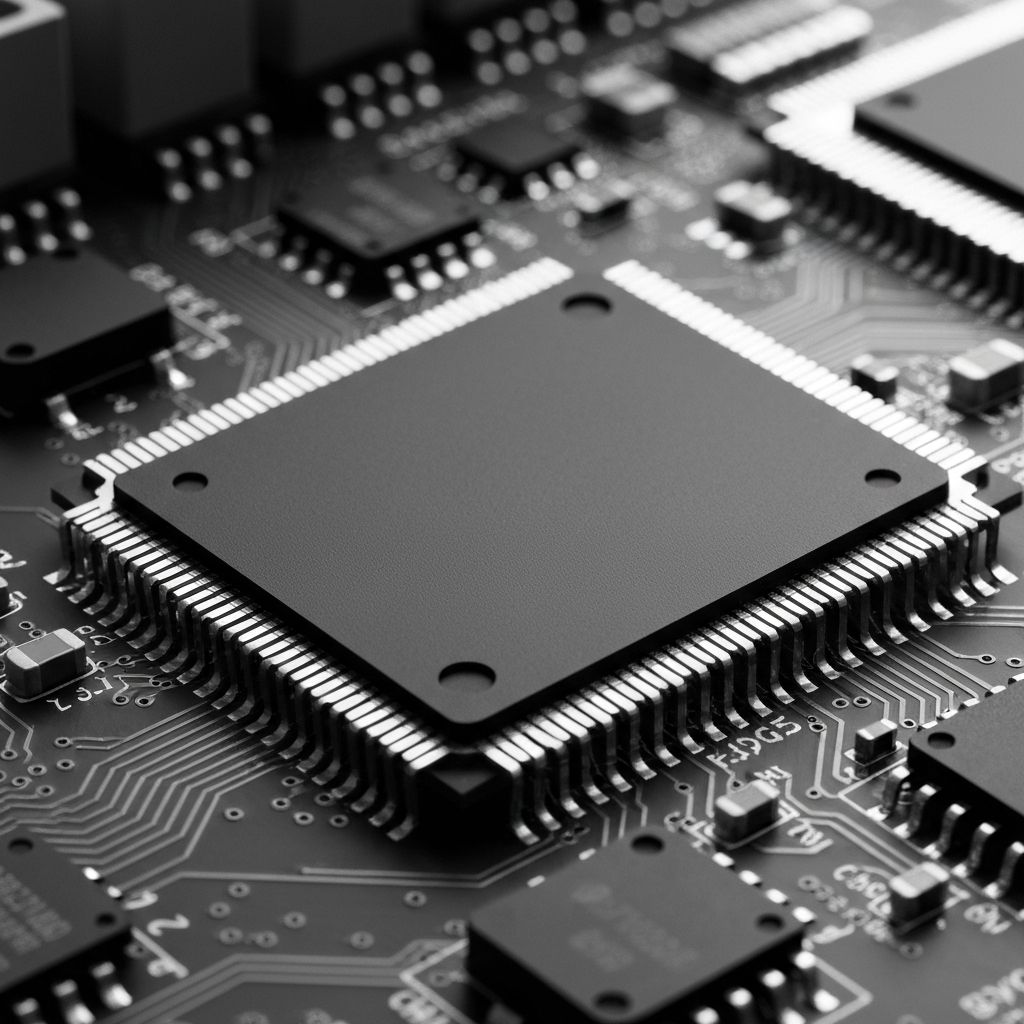
A safety co-processor, on separate silicon.
EvrChip sits between an AI system and the thing it controls. Every proposed action passes through a hardware pipeline that checks it against a loaded rule set, produces a cryptographic record of what was checked, and passes or withholds the governed command. The AI cannot reprogram, bypass or reach the safety processor, because there is no software path between them.
The enforcement block is validated on a Xilinx Zynq 7020 FPGA, with 80 ns post-route gate timing. The remaining blocks are designed and filed and are built during the funded development programme.
The requirement is older than the company.
In 1972 a United States Air Force study panel defined what any valid enforcement mechanism must do: always invoked, tamper-resistant, and small enough to verify. It concluded that software interpretation suffices only for restricted systems, and that general-purpose secure systems require hardware. Fifty-four years later, AI systems take consequential actions in the real world and that requirement has still not been met.
Evrmind exists to meet it. Our published research extends the same three properties across electronic and photonic substrates, and adds one more: that the enforcement layer must be able to show it acted.
Read the research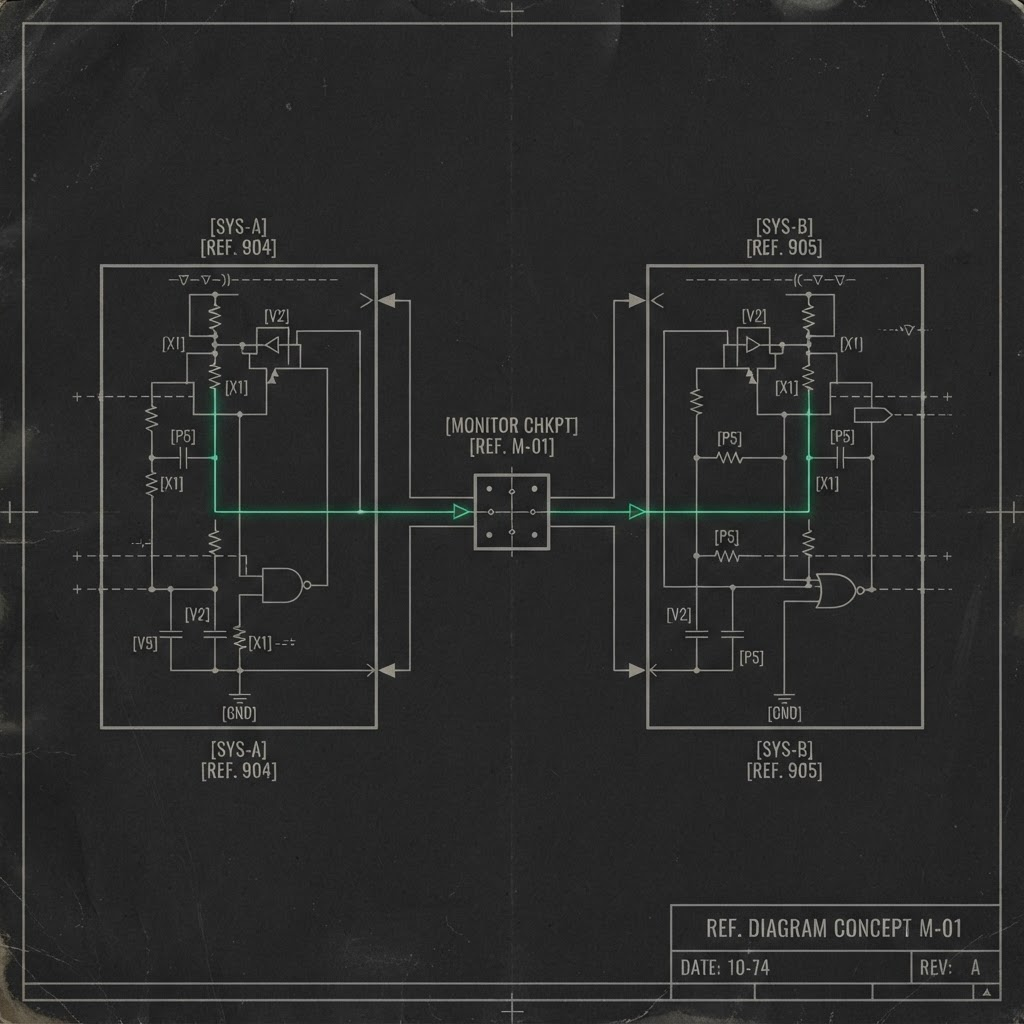

Why Evrmind exists.
Every approach to AI safety I looked at ran on the same computer as the AI it was meant to constrain. If the AI can reach the thing that governs it, the guarantee is a promise rather than a property. That seemed like the wrong place to put the guarantee.
I had no background in semiconductors. I learned the design, the formal methods and the cryptography, and took the enforcement block from architecture to measured silicon, because waiting for someone else to do it did not seem like a plan.
Every other safety-critical industry reached the same conclusion long ago: the thing enforcing the limit cannot be the thing being limited. Aviation, nuclear and automotive all did. AI is the exception, and it will not stay one.
— Ibrahim Vandenberg, Founder