Enforcement across industries
The architecture and the silicon stay the same across industries; only the rules change. Every industry deploying autonomous AI in a critical environment needs safety enforced in hardware.
Autonomous drone delivery over cities
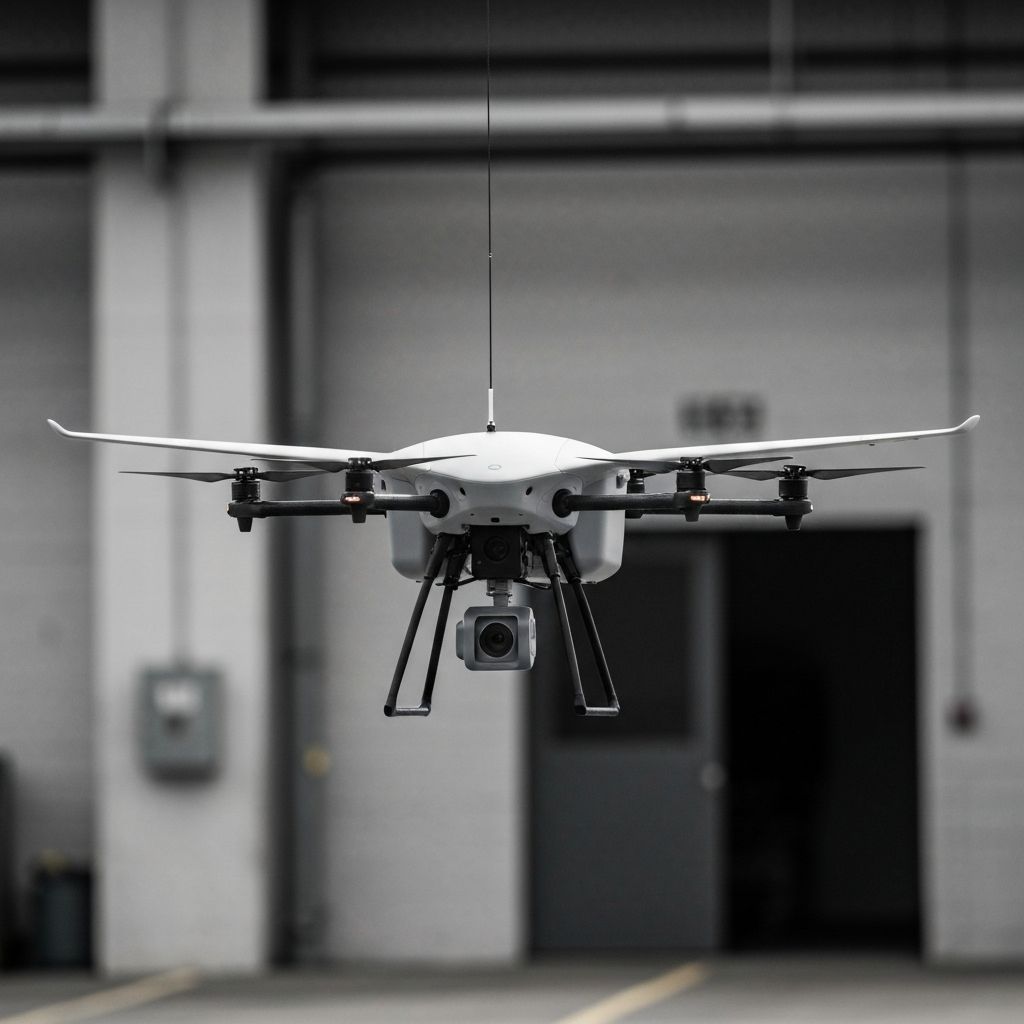
A UK logistics operator deploys an autonomous delivery drone fleet across urban airspace. Every flight passes through schools, hospitals, and residential areas. A single violation means regulatory shutdown, litigation, and loss of operating licence.
Airspace restriction
No flight within 5km of active airport runways or restricted airspace without authorisation
Population density
No autonomous payload release over densely populated areas if pedestrians are detected within 15m
Privacy compliance
Camera and sensor recording suspended within 50m of designated privacy-sensitive locations
Operational envelope
No flight if battery below 20% remaining capacity or wind exceeds 35 km/h
Every proposed action is checked against loaded rules at runtime before execution. If any rule is violated, the gate blocks the signal. The unsafe action does not execute, and every decision is signed for post-flight regulatory audit.
Collaborative robots on a shared line
A manufacturer deploys collaborative robots on a line where operators work within reach. AI-driven motion planning replaces fixed programming, expanding the range of actions the robot can take beyond the envelopes set at commissioning. A single force or proximity violation causes injury.
Force limits
No applied force exceeding the collaborative threshold when a person is detected within the shared workspace
Speed and separation
No motion above reduced speed while personnel are inside the monitored zone
Workspace boundaries
No movement of the tool centre point beyond the commissioned operating envelope
Stop authority
No resumption of motion after a protective stop without an explicit reset signal
Every commanded motion is verified before the drive receives it. If a safety parameter is breached, the command is withheld and the actuator does not move. Every action is cryptographically logged for functional safety audit.

Automated driving, public roads.
A manufacturer ships driver assistance and automated driving functions where the AI controls steering, braking and acceleration. The industry already places safety on separate silicon: lockstep cores and safety islands that verify the hardware is working correctly. None of them evaluates whether the action the AI proposes is permitted.
Operational design domain
No automated operation outside the conditions the function was released for
Dynamic limits
No commanded acceleration, deceleration or steering rate beyond the certified envelope for current speed and surface conditions
Handover integrity
No transition to automated control without a valid driver readiness signal
Intervention authority
No suppression of a braking request raised by the independent safety path
Every command is verified before it reaches the actuator. If a rule is broken, the command is withheld and does not execute. Every decision carries a signed record for type approval and post-incident investigation.

The grid cannot be switched past its limits.
An AI manages load balancing and fault response across a national power grid. Autonomous decisions control millions of homes and critical facilities. A cascading failure caused by an incorrect AI decision could black out entire regions.
Load boundaries
No load redistribution that would push any single substation beyond 95% rated capacity
Frequency protection
No switching action permitted if grid frequency deviates beyond 49.5 to 50.5 Hz
Critical facility priority
Hospitals, emergency services, and water treatment plants maintain priority power supply under all conditions
Cascade prevention
No simultaneous disconnection of more than two adjacent grid segments
Every grid management decision is verified before execution. If the AI proposes an action that risks cascade failure or breaks a safety margin, the command is withheld. Every decision is cryptographically attested for regulatory compliance.

Trading at machine speed.
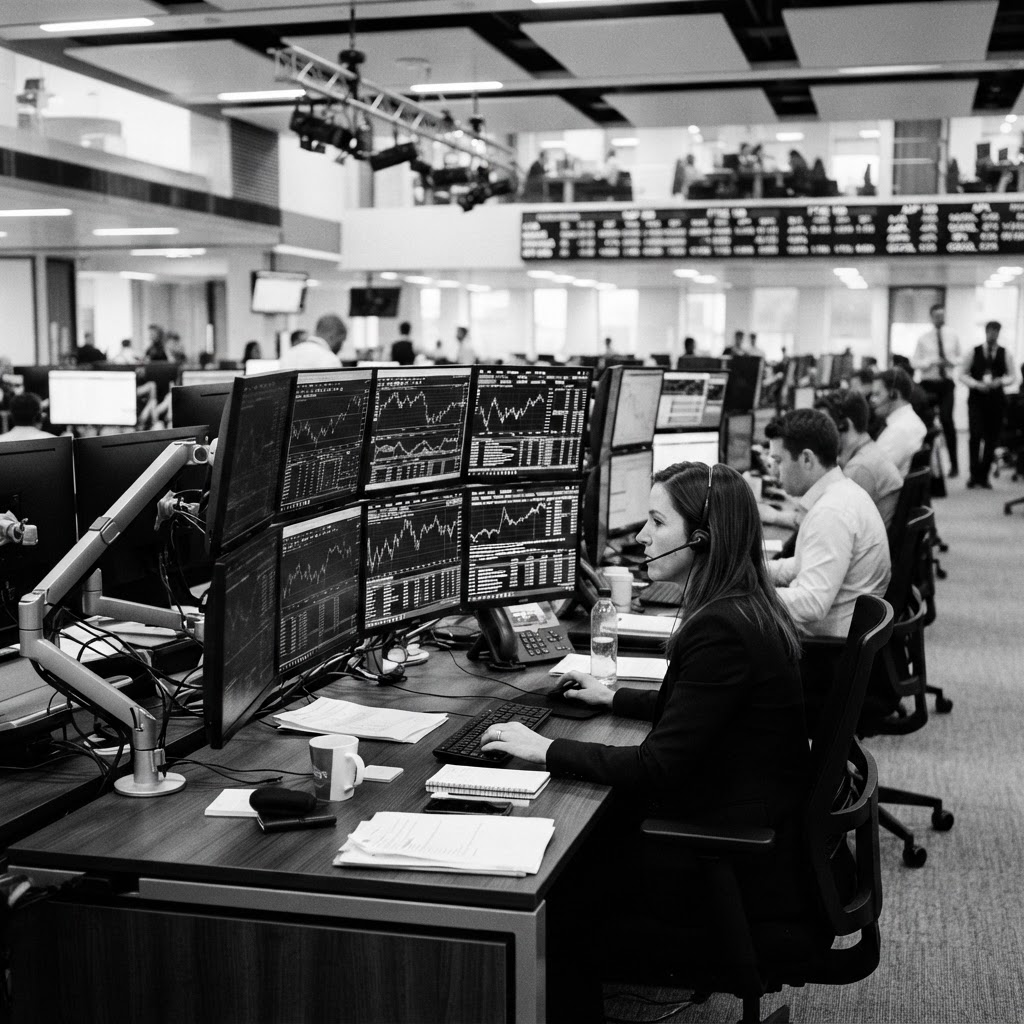
A Tier 1 investment bank deploys AI trading agents executing autonomous orders across global markets. A hallucinated trade signal during volatility could trigger a flash crash, regulatory investigation, and nine-figure losses.
Position limits
No single trade exceeding approved notional threshold without senior trader authorisation
Sanctions compliance
No transaction with counterparties on OFAC, EU, or UK sanctions lists
Market abuse
No pattern of orders that could constitute spoofing, layering, or wash trading under MAR
Risk boundaries
No aggregate exposure exceeding approved VaR limits per desk
Every trade is checked against the loaded rules before the order reaches the exchange. If a rule is broken, the order is withheld and never reaches the exchange. Every decision carries a signed record for regulatory review.
A surgical robot, mid-procedure.
A surgical robot assists with a complex procedure. The AI controls instrument positioning, dosing, and incision depth. A miscalculated movement could cause irreversible patient harm.
Dosage limits
No administered dose exceeding the approved maximum for the patient's weight, age, and condition profile
Instrument boundaries
No instrument movement beyond the defined surgical field perimeter
Vital sign gates
Procedure paused automatically if patient vital signs breach predefined safety thresholds
Authorisation chain
No irreversible action without explicit surgeon confirmation signal
Every robotic action is verified before the instrument moves. If any safety parameter is breached, the command is withheld and the instrument stops. Every action is cryptographically logged for post-operative review.

Agents with production access.
An enterprise deploys AI agents across operations: code deployment, customer service, procurement, HR workflows. Each agent has access to sensitive systems, data, and credentials. A compromised or hallucinating agent could exfiltrate data, approve unauthorised spend, or deploy faulty code to production.
Data boundaries
No agent access to data classified above its assigned clearance tier
Spend authority
No financial commitment exceeding the agent's approved threshold without human approval
Code deployment
No deployment to production without passing all verification gates and at least one human reviewer sign-off
Credential scope
No credential usage outside the agent's defined scope and time-limited access window
Every agent action is verified against its loaded constitution before execution. If the agent attempts an action outside its boundaries, the action is withheld and does not execute. Every decision is cryptographically signed for compliance audit and incident forensics.

Satellite autonomy with no ground link
A satellite operator runs autonomous collision avoidance, orbital manoeuvring and payload operations on board. Ground contact may be minutes away or unavailable. Every decision is irreversible and there is no recovery vehicle.
Manoeuvre envelope
No thruster firing outside the approved delta-v budget and attitude limits for the current mission phase
Collision avoidance
No manoeuvre that reduces separation from a catalogued object below the mission minimum
Payload constraints
No payload activation outside the licensed operating conditions
Ground authority
No irreversible configuration change without a valid authorisation held on board
Every proposed action is verified on board before the actuator receives it. If a rule is violated, the command is blocked at the gate, with or without a link to the ground. Every decision is signed for downlink and post-mission review.

One system, two adverse clients.
A firm deploys AI across contract analysis, disclosure review and case management. The same system holds material from multiple clients, some of them adverse to one another. A single boundary failure is a breach of privilege and a regulatory matter, not a bug.
Client separation
No retrieval of material across an information barrier between clients
Privilege protection
No transmission of privileged material outside the firm's defined boundary
Disclosure scope
No inclusion of documents outside the agreed disclosure parameters
Authorisation chain
No filing or external communication without an identified authorising individual
Every action is verified against the firm's loaded boundaries before it executes. If a rule is violated, the action is blocked and does not leave the system. Every decision is cryptographically signed for regulatory and professional conduct audit.

One architecture, any rule set
The rules change per deployment; the hardware enforcement does not. The pipeline validated on FPGA applies the same way to every operator running autonomous AI in a safety-critical setting.
Book a Meeting